Choosing between Cat5e vs Cat6 comes down to speed requirements, budget, and how future-proof you want your network to be. Both are twisted-pair Ethernet cables with RJ-45 connectors, but they differ significantly in bandwidth capacity and performance at higher frequencies. This guide breaks down every difference so you can make the right choice.
Cat5e vs Cat6: Quick Comparison
| Feature | Cat5e | Cat6 |
|---|---|---|
| Max Speed | 1 Gbps | 10 Gbps (up to 55 m) |
| Bandwidth | 100 MHz | 250 MHz |
| Max Distance (1G) | 100 meters | 100 meters |
| Max Distance (10G) | Not supported | 55 meters |
| Wire Gauge | 24 AWG | 23 AWG |
| Spline Separator | No | Yes (most) |
| Crosstalk | Reduced | Further reduced |
| Price | Lower | ~20–30% more |
| Best For | Home networks, 1 Gbps | Offices, future-proofing, 10G |
What Is Cat5e?
In the Cat5e vs Cat6 debate, understanding each cable’s specifications first makes the comparison clear.
Cat5e (Category 5 enhanced) is an improved version of the original Cat5 standard, defined by the TIA-568 standard. The “e” stands for enhanced it has stricter limits on crosstalk and system noise compared to Cat5. Cat5e supports speeds up to 1 Gbps (1000BASE-T) at bandwidths up to 100 MHz over distances up to 100 meters.
Cat5e uses 24 AWG copper conductors twisted in pairs to reduce electromagnetic interference. It is still the most widely deployed Ethernet cable in homes and small offices worldwide. If you are running a standard home network with a gigabit router, Cat5e is fully adequate.
What Is Cat6?
In a Cat5e vs Cat6 comparison, Cat6 is the clear winner on raw performance.
Cat6 (Category 6) is the next step up, supporting 10 Gbps (10GBASE-T) at distances up to 55 meters, and 1 Gbps at the full 100-meter run. It operates at bandwidths up to 250 MHz more than double Cat5e. Cat6 cables typically use a spline separator (a plastic cross inside the cable) to physically separate the four wire pairs, which significantly reduces crosstalk.
Cat6 uses slightly thicker 23 AWG conductors, which reduces resistance and improves high-frequency performance. The thicker jacket and spline make Cat6 cables stiffer and harder to route through tight spaces.
Cat5e vs Cat6: Speed and Bandwidth Differences
The most important difference between Cat5e and Cat6 is performance at high frequencies:
- Cat5e at 100 MHz: Handles 1 Gbps reliably over 100 meters. Cannot support 10 Gbps.
- Cat6 at 250 MHz: Handles 10 Gbps up to 55 meters, and 1 Gbps over 100 meters.
- Cat6a at 500 MHz: Handles 10 Gbps over the full 100-meter run the upgrade path if you need 10G everywhere.
For most home users with gigabit internet plans, Cat5e and Cat6 are completely equivalent in practice. The 10 Gbps advantage of Cat6 only matters if your switch and network cards support it.
Cat5e vs Cat6: When to Use Each
- Home networks with 1 Gbps or slower internet connections
- Replacing existing Cat5e runs no reason to upgrade if the cable is working
- Long runs where budget is a concern
- Any installation that only needs 1 Gbps performance
When to Use Cat6
- New office or home installations the marginal cost is small for future-proofing
- Runs under 55 meters where you want 10 Gbps capability
- Environments with high EMI (fluorescent lighting, electrical motors)
- Any network where you plan to upgrade to 10G switches within 5 years
Physical Differences Between Cat5e vs Cat6
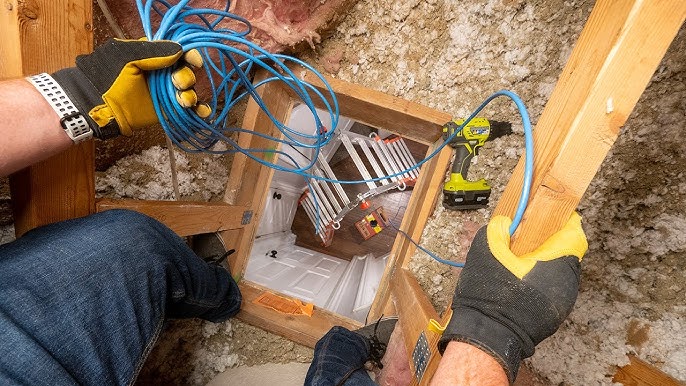
Cat6 cables are physically thicker and less flexible than Cat5e. The spline separator inside makes them harder to terminate with RJ-45 connectors and more difficult to route through conduit. If you are pulling cable through walls or conduit, this is worth factoring in. Cat5e is easier to work with in tight spaces.
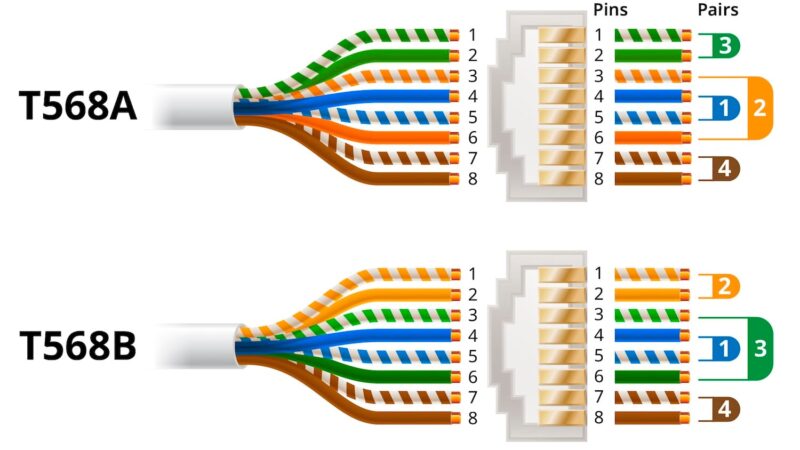
Both cables use the same T568A and T568B wiring standards and RJ-45 connectors, so they are compatible with the same tools and patch panels.
Cat5e vs Cat6 for PoE (Power over Ethernet)
For powered devices, the Cat5e vs Cat6 distinction matters more than in standard data runs.
Both Cat5e and Cat6 support Power over Ethernet (PoE) for powering IP cameras, access points, and VoIP phones. However, Cat6’s thicker 23 AWG conductors have lower resistance, which means less heat generation and voltage drop over long PoE runs. For PoE++ (up to 100W), Cat6 is the better choice.
Cat5 vs Cat6 vs Cat7: How Do They Compare?
When people search for cat5 vs cat6 vs cat7, they usually want to know which cable to buy for a new installation. Here is how all three generations stack up — and why the answer is almost always Cat6 or Cat6A.
| Category | Max Speed | Max Distance | Standard | Best For |
|---|---|---|---|---|
| Cat5 | 100 Mbps | 100m | Legacy | Outdated — avoid for new runs |
| Cat5e | 1 Gbps | 100m | TIA-568 | Acceptable for existing installs |
| Cat6 | 10 Gbps (55m) | 100m | TIA-568 | Best choice for new home installs |
| Cat6A | 10 Gbps | 100m | TIA-568 | Offices and data centers |
| Cat7 | 10 Gbps | 100m | ISO/IEC only | Rarely used — not TIA-approved |
What About Cat6A?
Cat6A (Augmented Category 6) solves Cat6’s one limitation: Cat6 drops from 10 Gbps to 1 Gbps beyond 55 meters. Cat6A maintains full 10 Gbps at the full 100-meter run length.
It is the right choice for office buildings, structured cabling installations, and anywhere cable runs exceed 55 meters. The trade-off is that Cat6A cables are significantly thicker and stiffer — harder to route through tight conduit. For a standard home install, Cat6 is sufficient.
What About Cat7?
Cat7 is where marketing diverges from reality. Despite being sold in retail stores, Cat7 is not recognized by the TIA/EIA-568 standard used by network professionals in the US and most of the world. It is defined only under ISO/IEC 11801, which means it lacks official support in most commercial and residential cabling specs.
Cat7 uses GG45 or TERA connectors rather than standard RJ-45, which creates compatibility problems with standard wall plates, patch panels, and switches. Most Cat7 cables sold retail use modified connectors that are not fully compliant with any standard.
The bottom line on cat5 vs cat6 vs cat7: skip Cat7. If you need 10 Gbps at full 100-meter runs, use Cat6A. If you are wiring a home or small office, Cat6 is the right cable at a lower cost and easier installation.
Frequently Asked Questions
Is Cat6 worth it over Cat5e for home use?
For most home users today, no Cat5e handles 1 Gbps perfectly well. But for new installations, the small price difference makes Cat6 a reasonable choice for future-proofing. If your internet plan is under 1 Gbps and you don’t have a 10G switch, you won’t notice any difference.
Can I mix Cat5e and Cat6 cables?
Yes. Cat5e and Cat6 use the same RJ-45 connectors and are backward compatible. A network segment with mixed cables will perform at the lowest cable’s specification typically 1 Gbps if Cat5e is in the path.
Does Cat6 improve WiFi speed?
No. Cat6 only affects wired Ethernet connections. The cable between your router and access point can affect backhaul throughput, but your wireless devices connect over WiFi the cable type has no direct effect on WiFi speed.
What cable should I use for a new home installation?
Cat6 for most runs. The cost difference is small when buying in bulk, and you get 10G capability for any short runs. For runs over 55 meters where you might want 10G in the future, use Cat6a.
For more on how Ethernet works and cable types, or if you need a crossover cable for direct device connections, see our related guides.
More in This Series
- What Is Ethernet? The Guide That Finally Makes It Click
- T568A vs T568B: The Wiring Difference That Actually Matters
- What Is a Crossover Cable?
- What Is a Patch Cord? Types, Uses, and How It Differs from Other Cables
- How to Reduce Network Latency: 7 Fixes That Actually Work