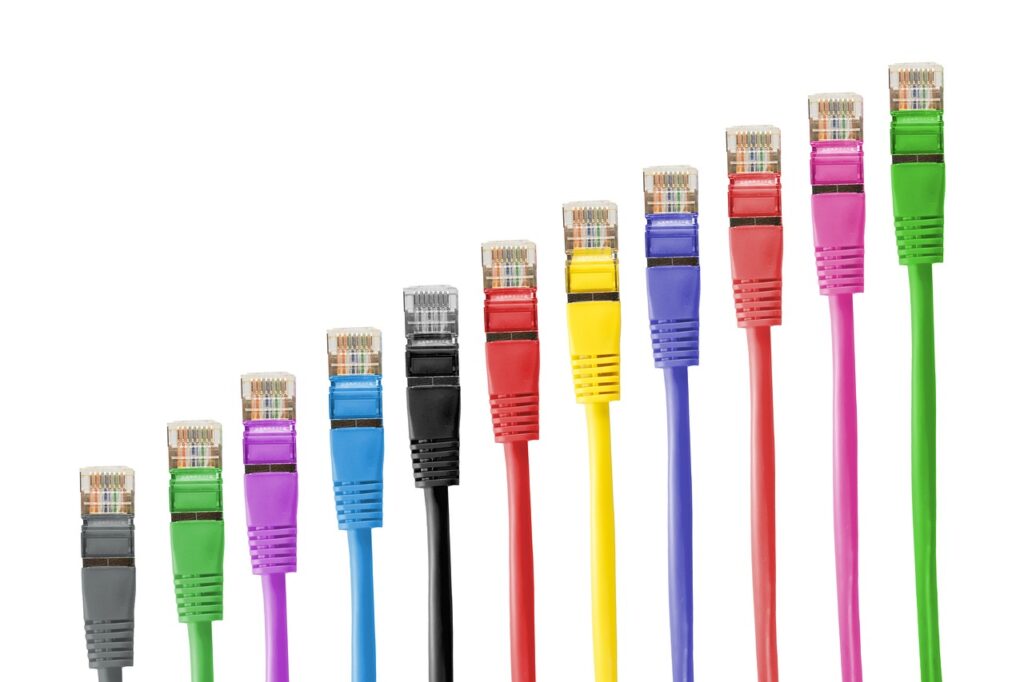
A patch cord (also called a patch cable or patch lead) is a short, pre-made cable with connectors on both ends used to connect networking devices to each other or to a patch panel. They are the most common type of Ethernet cable in use the cable going from your router to your computer is a patch cord.
This article is part of the complete Home Networking Guide — a single reference covering cables, hardware, IP addresses, and troubleshooting for home networks.
What Is a Patch Cord Used For?
These cables connect endpoints in a network. Common uses include:
- Connecting a computer or laptop to a wall jack or network switch
- Connecting switches to routers in a network rack
- Linking patch panel ports to switch ports in structured cabling
- Connecting servers to top-of-rack switches in data centers
- Any short-distance connection between two network devices
They are typically between 0.5 meters and 5 meters long. For longer permanent runs inside walls, solid-core cable is used instead they use stranded copper which is more flexible but has slightly higher resistance over long distances. Understanding how Ethernet works helps clarify why patch cords have these specifications.
Types of Patch Cords
Ethernet Patch Cord (Copper)
The most common type. Uses twisted-pair copper conductors with RJ-45 connectors. Available in Cat5e, Cat6, Cat6a, and Cat8 versions. The category determines the maximum supported speed and bandwidth. For a detailed comparison, see Cat5e vs Cat6.
Fiber Optic Patch Cord
Uses glass or plastic optical fiber instead of copper. Connects switches to fiber uplink ports, or SFP modules to other equipment. Common connector types are LC, SC, ST, and MTP/MPO. Used for high-speed backbone connections and long-distance runs where copper reaches its 100-meter limit.
Telephone Patch Cord
Uses RJ-11 connectors (smaller than RJ-45) for traditional telephone lines and DSL connections. Less common in modern networking but still used in legacy PBX systems and DSL modems.
Patch Cord Wiring: Straight-Through vs Crossover
Standard patch cords are straight-through cables the wire order is identical on both ends (T568B on both ends, or T568A on both ends). This is the correct cable for connecting different device types: computer to switch, switch to router.
A crossover cable uses T568A on one end and T568B on the other, swapping the transmit and receive pairs. This was historically required for connecting same-type devices (computer to computer, switch to switch) but is rarely needed today because modern devices support Auto-MDI/MDIX they automatically detect and adjust for either cable type.
| Cable Type | Wiring | Use Case |
|---|---|---|
| Patch cord (straight-through) | T568B both ends | PC to switch, switch to router |
| Crossover cable | T568A one end, T568B other | PC to PC, switch to switch (legacy) |
| Rollover/console cable | Reversed pins | Console access to Cisco devices |
Wiring Standards
These cables follow the TIA-568 standard, which defines the wiring pinout, performance requirements, and connector specifications. The two wiring schemes T568A and T568B produce electrically equivalent cables. T568B is more common in commercial installations in North America.
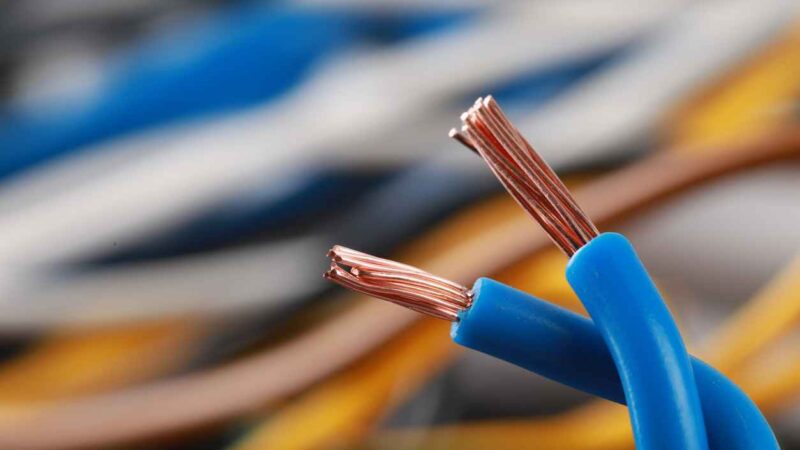
The conductors inside patch cords are stranded copper wire rather than the solid copper used in permanent wall runs. Stranded wire handles repeated bending without breaking important for cables that are frequently plugged and unplugged. For more on conductor types, see our copper wire guide.
How to Choose the Right Cable
- Category: Match or exceed the category of your installed cabling. Cat6 cables with Cat6 wall runs, Cat5e with Cat5e.
- Length: Use the shortest cable that reaches. Excessive slack creates cable management problems in racks.
- Shielding: In environments with heavy electromagnetic interference (factories, hospitals), use STP (shielded) patch cables.
- Boot style: Snagless boots protect the RJ-45 locking tab important for cables in dense rack environments.
Frequently Asked Questions
Is a patch cord the same as an Ethernet cable?
A patch cord is a type of Ethernet cable specifically a short, pre-made straight-through cable with RJ-45 connectors. The term “Ethernet cable” is broader and includes bulk cable used for permanent runs. In everyday use, most people mean these cables when they say “Ethernet cable.”
What is the difference between a patch cord and a patch cable?
There is no difference they refer to the same thing. “Patchcord” (one word) is also commonly used, especially in European and telecom contexts.
Can I use a patch cable for a long run?
Technically yes, up to 100 meters total. But they use stranded copper which has slightly higher resistance than solid copper. For in-wall permanent runs, solid core Cat5e or Cat6 cable is better. Use patch cords only for the short connections at each end of a structured cabling run.
See also: Auto MDI-X Explained — why modern ports automatically handle any cable type.