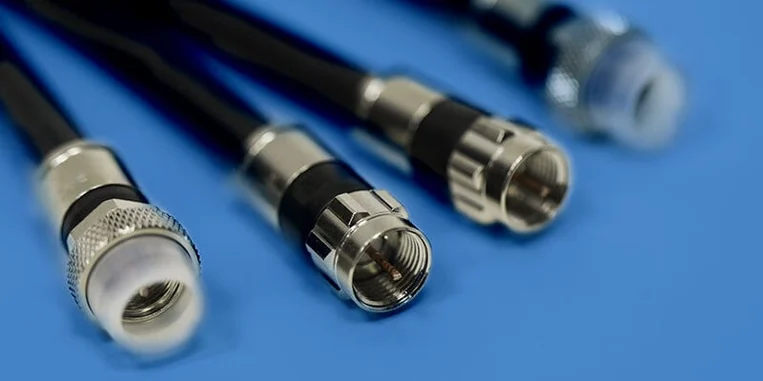
Coaxial cable (coax) is an electrical cable with a central copper conductor, a tubular insulating layer, a metallic shield, and an outer protective jacket. Its concentric design gives it excellent resistance to electromagnetic interference (EMI) and low signal loss over distance. For a full overview of cable types, see our guide on What Is Ethernet? The Guide That Finally Makes It Click.
Anatomy of a Coaxial Cable
- Inner conductor: Solid or stranded copper wire that carries the signal.
- Dielectric insulator: Non conducting layer (usually polyethylene) separating the conductor from the shield.
- Metallic shield: Braided copper mesh or aluminum foil blocking external interference and preventing signal leakage.
- Outer jacket: Protective PVC or polyethylene coating.
Types of Coaxial Cable
- RG-6: Most common today. Used for cable TV, satellite, and broadband internet. Supports higher frequencies than RG-59.
- RG-59: Older standard for CCTV and short distance video. Lower bandwidth.
- RG-11: Thick and rigid, used for long cable runs where signal strength must be maintained.
- RG-58: Used in legacy 10BASE-2 Ethernet (Thinnet). Largely obsolete.
Where Is Coaxial Cable Used?
- Cable TV and satellite: Delivering video signals from provider to set top box.
- Broadband internet (DOCSIS): Cable ISPs use coax for last mile home connections.
- CCTV security systems: Analog surveillance cameras use RG-59 coax.
- Ham radio and antennas: Connecting transmitters to antennas with low signal loss.
- Legacy Ethernet: Early 10BASE-2 and 10BASE-5 standards ran over coaxial cable.
Coaxial vs. Twisted Pair
| Feature | Coaxial (RG-6) | Twisted Pair (Cat6) |
|---|---|---|
| EMI resistance | Excellent | Good (UTP) / Better (STP) |
| Max distance | 300–500 meters | 100 meters |
| Flexibility | Moderate | High |
| Common use | TV, internet, CCTV | LAN networking |
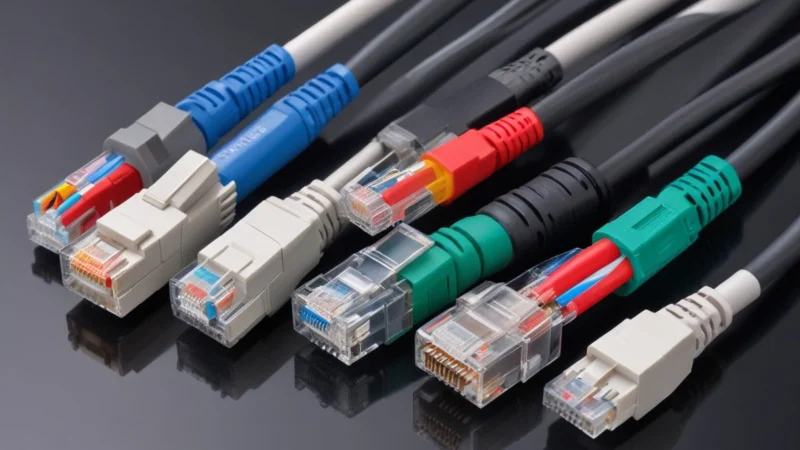
| Connectors | F-type, BNC | RJ-45 |
Conclusion
Coaxial cable remains widely deployed for cable TV, broadband internet, and surveillance systems. While twisted pair Ethernet has replaced it in most LAN environments, coax is indispensable for RF signal transmission and longer distance applications.